Home maintenance advice
Who is responsible for blocked drains: the tenant or landlord?
20 Jul 2026 • 6 minutes
Home maintenance advice
20 Jul 2026 • 6 minutes
In most cases, landlords are responsible for maintaining the plumbing and drainage systems within their rental properties.
Under Section 11 of the Landlord and Tenant Act 1985, landlords are legally responsible for keeping installations for drainage and pipework in good repair and proper working order. This means that if a blocked drain is caused by general wear and tear, structural problems, tree root intrusion, or issues within the property’s drainage system, it’s typically the landlord’s responsibility to resolve it.
Landlords are also usually responsible for arranging and paying for a plumber to investigate the issue and identify the cause of the blockage.
This includes issues such as:
If a drainage issue is affecting the property, it’s important for landlords to act quickly to help prevent further damage and disruption.
While landlords are responsible for maintaining the plumbing system itself, tenants can still be liable for drainage problems caused by misuse or negligence.
For example, a tenant may be responsible if the blockage is caused by:
Under Section 11 of the Landlord and Tenant Act 1985, landlords are responsible for maintaining drainage systems, but tenants still have a duty to use the property in a reasonable way and avoid causing damage.
Tenants are also responsible for reporting plumbing or drainage problems as soon as possible. Delaying repairs could make the issue worse and potentially increase costs.
If there’s any uncertainty around responsibilities, the tenancy agreement should outline who is responsible for certain repairs and maintenance issues.
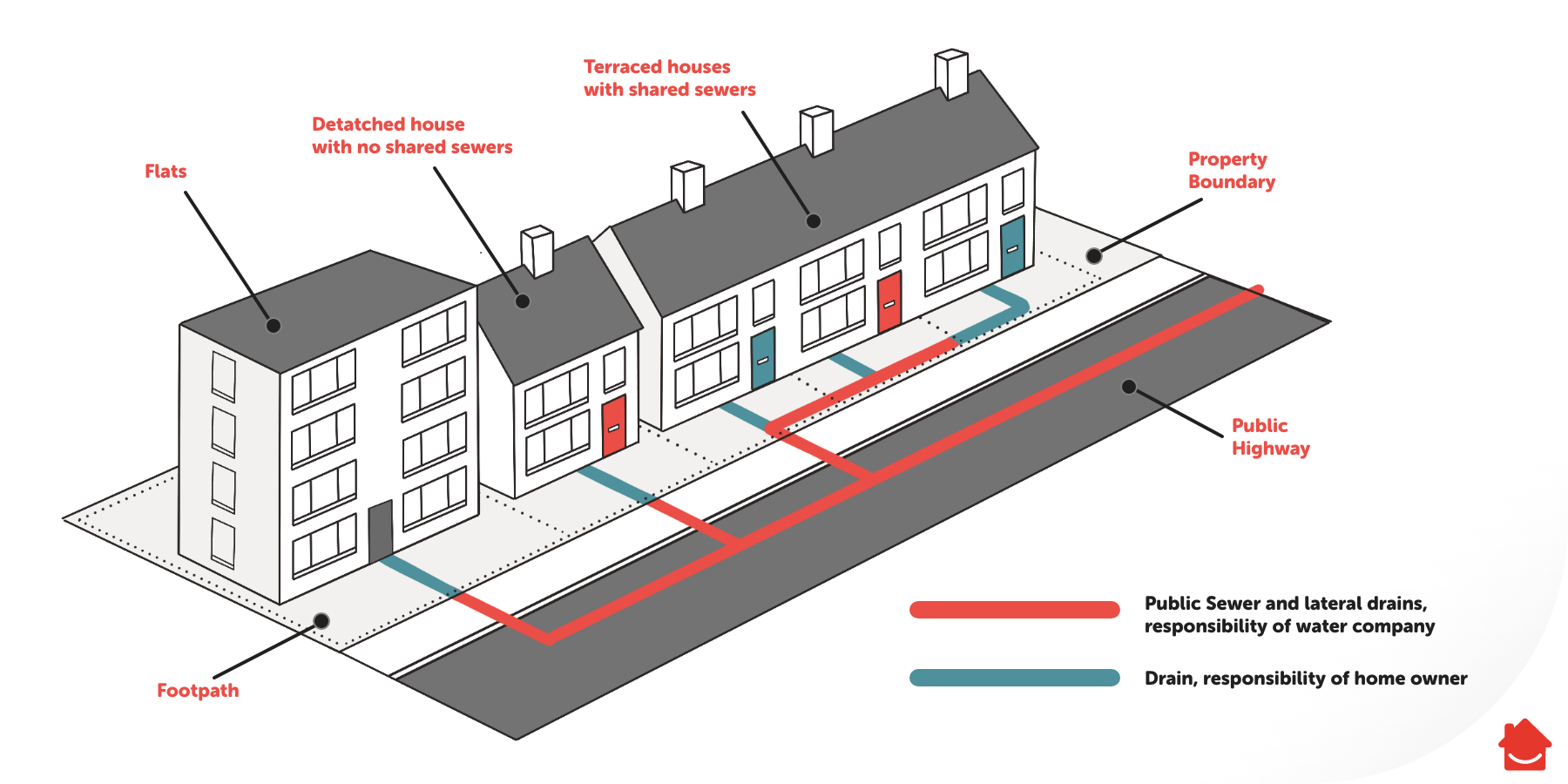
For rental properties, if an outside drain within the boundary of the property is blocked, it is usually the responsibility of the landlord to investigate and fix the issue.
However, if the blockage affects a shared drain or public sewer outside the property boundary, responsibility typically lies with the local water company.
This can sometimes make outdoor drainage issues more complicated, especially in terraced properties or flats where drainage systems are shared between multiple homes.
If you’re unsure whether the drain is private or shared, a qualified drainage engineer or your sewerage provider (sometimes the same as your water company) should be able to help identify who is responsible. Tenants can contact the sewerage provider themselves, but it often makes most sense for landlords to own this conversation as they try to fix the issue.
Not sure who your provider is? Water UK provide a useful tool to identify your water and sewerage suppliers, simply by entering your postcode.
Unexpected plumbing and drainage problems can be stressful for both landlords and tenants, especially when urgent repairs are needed.
HomeServe’s Landlord’s Plumbing and Drainage Plus cover gives you access to expert help when problems arise—helping you deal with blocked drains and other common plumbing issues quickly and hassle free.
Whether you’re tackling blocked drains in your property or tenants have raised concerns about leaking pipes, HomeServe is here to help keep your rental property running smoothly with reliable support when you need it most.
Our help & advice articles cover Plumbing, Home heating, Electrical, Energy-saving and Home maintenance.