Plumbing advice
What to do if you have a blocked drain outside
13 Nov 2025 • 7 minutes
Plumbing advice
13 Nov 2025 • 7 minutes
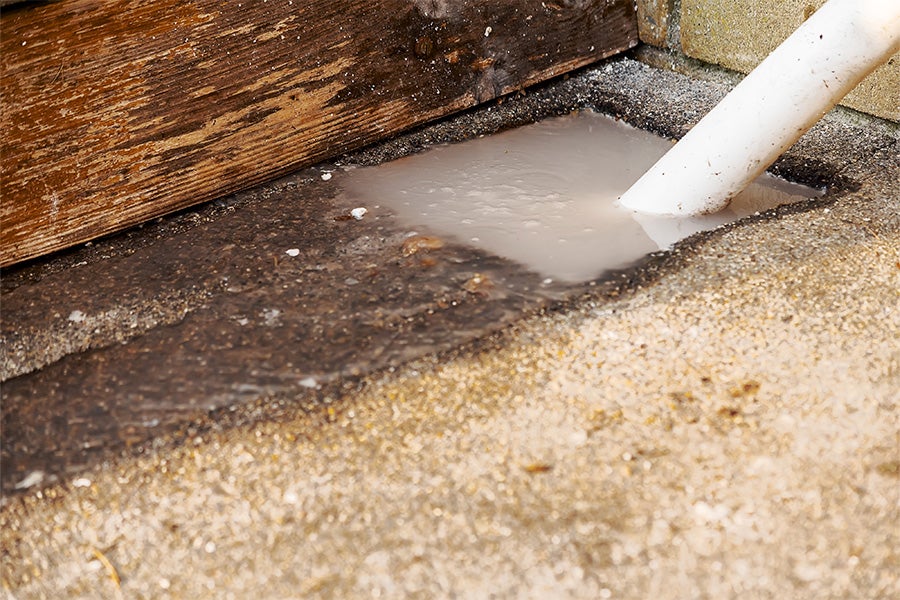
There are a few reasons why the drain on your property might be blocked:
First, take a look at your outside drain to see if you can find an obvious blockage. If not, then the blockage could be in a shared drain. Talk to your neighbours and ask them if they have any issues with water draining at their house.
If they’re not experiencing any trouble, or your inside drain’s blocked, but your external drain is fine, then it’s your responsibility to fix.
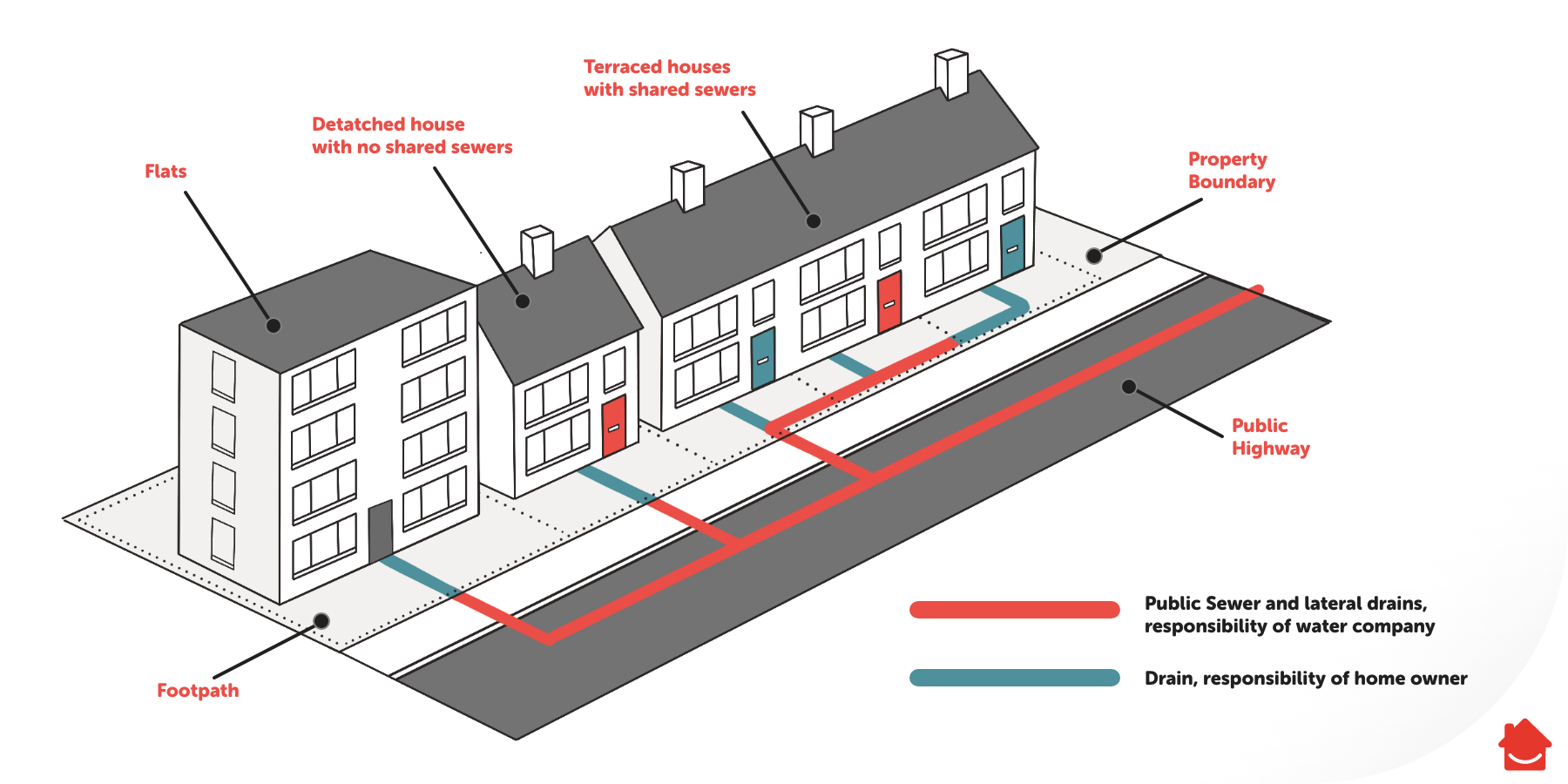
The responsibility for blocked drains depends on how the drainage network operates in your area, but in a nutshell:
The diagram below shows who is responsible for a blocked drain, depending on where the blockage is located.
Keep yourself covered with our plumbing and drainage cover. If a blockage affects your home and it’s your responsibility to sort it, our cover means you’ll be able to call on our trusted Home Experts to help you.
It’s vital to contact your local water company if your outside drains are shared, as the source of the blockage may be from another property and your own DIY fixes will not clear the issue in the long term.
To find out if your outside drains are shared, contact your water company. You can also check the deeds of your property or give your local authority a call.
There are steps you can take to fix a blocked drain yourself, as long as it’s a fairly minor issue and it’s not a shared drain. If you’re at all in doubt, get in touch with a professional plumber or drainage expert. They’ll have the tools to unblock the drain quickly and efficiently. Don’t attempt anything you’re not sure about.
First, you need to work out where the blockage is and therefore who is responsible for it.
You’ll need a few items for the job:
You’ll need a strong flat-head screwdriver or other appropriate tools for this, depending on the cover. As you lift the drain cover, make sure you have a good grip on it to prevent it falling down the drain.
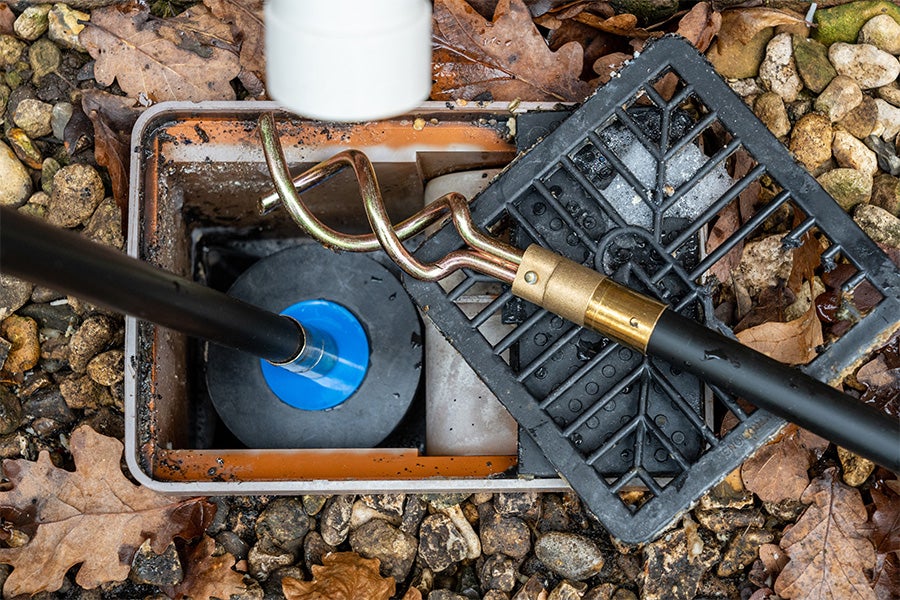
Don your protective clothing, place your bucket or bin bags nearby and remove the drain cover. Can you see an obvious blockage? Drains can often get blocked by dirt and debris – if this is the case you can, get your gloves on and try to remove as much of the blockage with your hands as possible.
Reminder: If the blockage looks or smells like waste, don’t use your hands! Apart from being very unpleasant, it can also be bad for your health. In this case it’s best to call a professional or use a tool like a drain rod.
A drain rod is a set of connected rods used for clearing blocked drains. You might not have one, but they’re easy to use and can be picked up relatively cheaply.
Insert the drain rod into the drain and twist the rod into the blockage in a clockwise direction, applying some pressure. Keep plunging and twisting – the blockage may be extremely stubborn. When it starts to feel easier, that’s your sign that the blockage is clearing.
Don’t have a drain rod? Don’t mess around with a deep drain blockage. Get a drainage expert in to fix the problem.
If safe to do so, you’ll want to remove as much of it as you can before attempting to remove some of the blockage with your hands. Your drain rod will still work through standing water.
If DIY is getting you nowhere, it’s time to call the professionals in.
The cost of unblocking an outside drain depends on the type of blockage you have, how deep it is in your system and the method or equipment needed to unblock your drain.
Water jetting of external drains costs an average of £259*, while unblocking a private drain can cost around £386* on average, however the cost may vary depending on the severity of the blockage.
Need a blocked drain fix without the hassle? With Ding, a new home repairs membership from HomeServe, blocked drain repairs start from £175. Just Ding it.
You can start by using the same methods you’d try for clearing an inside drain blockage.
It’s important to keep your drains clear to prevent blockages. However, if you’re having trouble HomeServe can connect you with trusted, experienced professionals who’ll help to sort things out, via our insurance or repairs service.
All internal drains on your property, as well as your immediate outside kitchen drain, are the responsibility of the homeowner. If it’s an external/shared drain, you can find out whose responsibility it is by contacting your local water company.
If you have a drain cover inside your property boundary and it serves only your property, it is your responsibility to maintain it. If it serves other properties as well, confirm ownership with the local water company. Your local water company is responsible for lateral drains and sewers.
Your local authority or council is responsible for road drains, including those on country roads. As a homeowner, your responsibility for drains usually extends to the boundary of your garden or driveway.
*BCIS© Research, September 2025 (prices include labour, parts, call-out charges and VAT)
Our help & advice articles cover Plumbing, Home heating, Electrical, Energy-saving and Home maintenance.