Electrical advice
Fuse boxes explained
16 Mar 2026 • 6 minutes
Electrical advice
16 Mar 2026 • 6 minutes
A fuse box is a device that controls and protects your electrical system. It manages how electricity is distributed around your home and helps keep you safe by cutting off the power if a fault is detected.
You may hear fuse boxes referred to by a few different names, including fuse boards, electrical panels, or consumer units. In most UK homes, you will likely have a consumer unit. This is essentially a type of fuse box designed with modern safety features.
Consumer units perform the same core job as older fuse boxes, but they’re built to current safety standards and usually include circuit breakers and other safety devices instead of traditional fuse wire. These upgrades make it easier to reset power after a fault and offer better protection against electric shocks and fire risks.
Your fuse box is an essential part of your home’s electrical system. As well as protecting your wiring and appliances, it’s designed to keep you and your family safe by reacting quickly to potential problems.
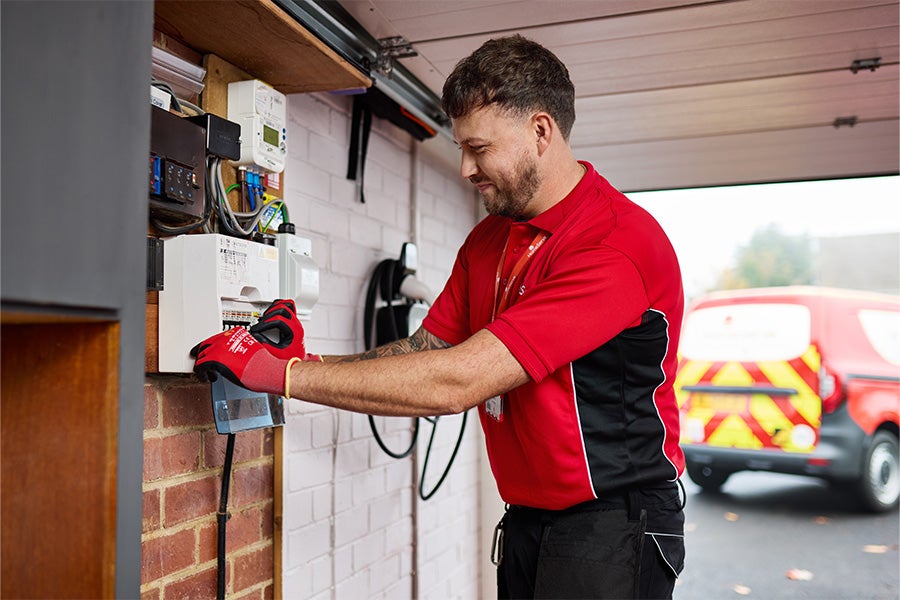
Fuse boxes are usually installed somewhere that’s easy to access, but they aren’t always obvious. Common locations include:
It’s a good idea to know exactly where your fuse box is and make sure you can reach it quickly. In an electrical emergency, being able to access it straight away can make all the difference.
Expert tip: Keep a torch somewhere near your fuse box so you can still find and use it easily if there’s a loss of power to your lights.
Your fuse box divides electricity from the mains supply and sends it into separate circuits around your home, such as lighting, sockets, and larger appliances.
Each circuit is protected by a safety device. If a circuit becomes overloaded or a fault is detected, the fuse box automatically stops the flow of electricity to that circuit. This prevents damage to your wiring and appliances, while reducing the risk of electric shock or fire.
In some older homes, fuse boxes use fuse wire that melts or “blows” when a fault occurs, stopping the circuit. The fuse then needs to be manually replaced. Most homes today have modern consumer units, which use circuit breakers and Residual Current Devices (RCDs) instead. These respond more quickly to faults and are much easier to reset once the issue has been dealt with.
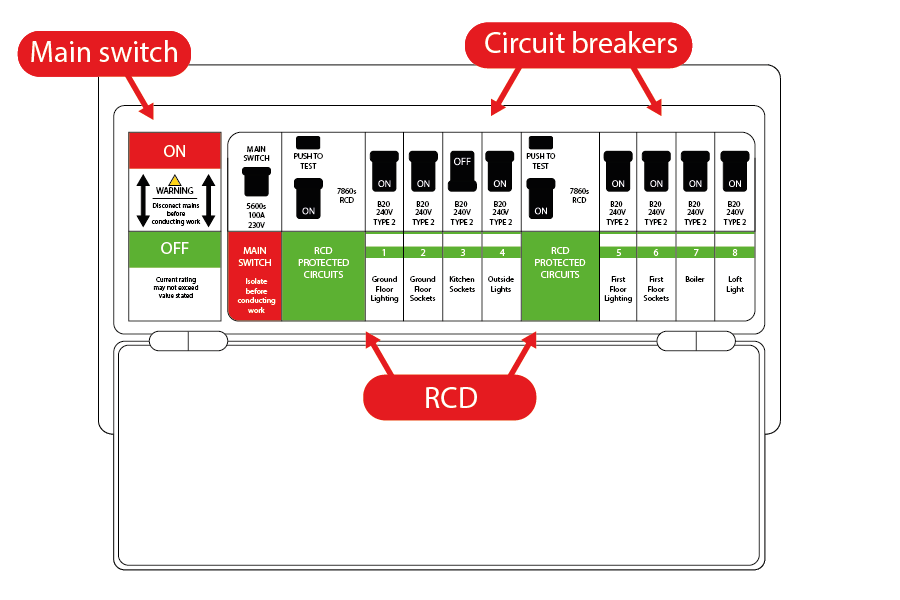
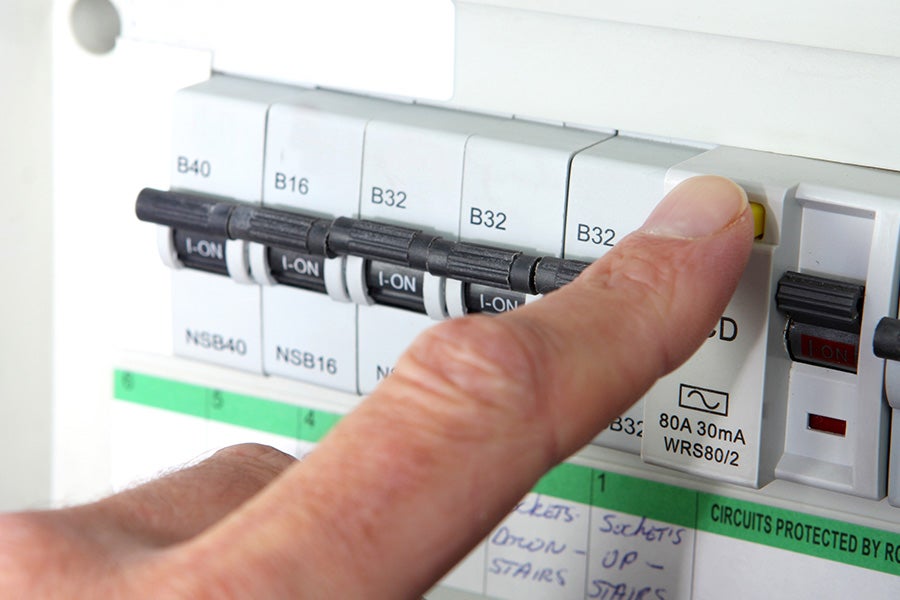
What’s commonly referred to as a fuse box is often a consumer unit. These units contain several key components, each with a specific role in monitoring your electrics and responding quickly if a fault occurs.
The main switch (usually a large, red switch) controls the electricity supply to your entire home. When you turn off the main switch, it cuts power to all circuits at once.
You might need to use the main switch when electrical work is being carried out, if there’s a serious fault, or if you need to make your home safe in an emergency.
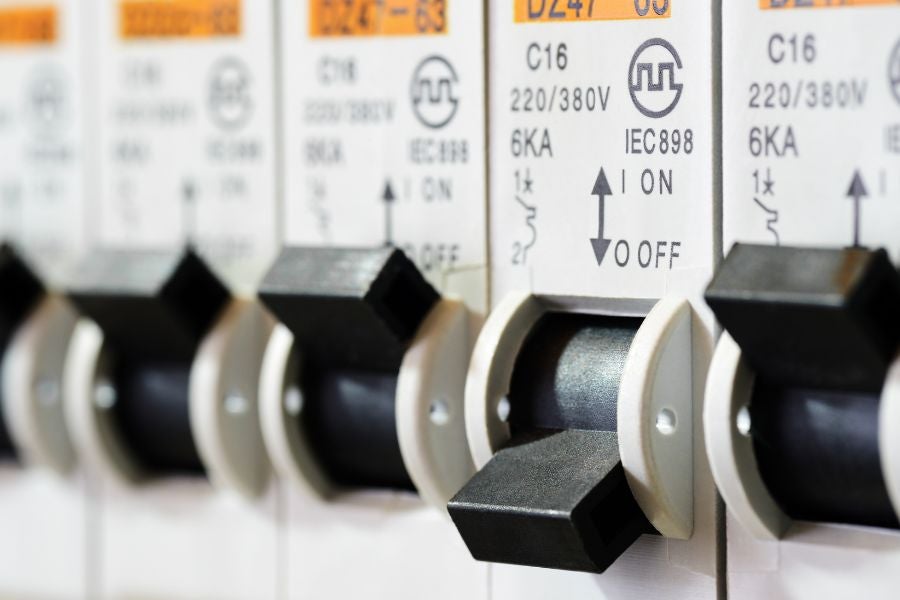
Circuit breakers protect individual circuits in your home. If a circuit becomes overloaded or develops a fault, the breaker will trip, switching itself off to stop the flow of electricity.
In older fuse boxes, this protection worked slightly differently. Instead of a switch tripping, a fuse wire would melt or “blow” when too much electricity flowed through the circuit, breaking the connection and cutting off the power, which would then require the fuse to be replaced.
A circuit might trip if you plug in too many appliances at once, or if there’s a wiring issue or a faulty device. Once the cause is fixed, the circuit breaker can usually be switched back on. However, if your breakers trip repeatedly, it may indicate a deeper issue that requires professional electrical repair.
RCDs are safety devices designed to protect you from electric shock. They constantly monitor the flow of electricity and shut off power almost instantly if they detect a fault, such as electricity flowing where it shouldn’t.
RCDs are especially important in areas where electricity and water are in close proximity, like kitchens and bathrooms.
Although circuit breakers and RCDs can sound similar, they serve different purposes. Circuit breakers protect your electrics, while RCDs protect you by responding instantly if electricity is flowing where it shouldn’t.
If part of your home suddenly loses power, it’s often because a circuit breaker has tripped. This is usually a safety response rather than a sign of something serious.
Check your fuse box to see which switch has moved to the off position, then unplug the appliances in the affected area. Reset it once and see if the power returns.
If the fuse box trips again straight away, don’t keep resetting it. This could indicate a more serious electrical fault. At that point, it’s safest to stop troubleshooting and contact a qualified electrician to investigate further.
Electrical problems can be worrying, especially when they happen unexpectedly. That’s where we can help.
With our Electrical cover, you’ll have access to trusted, qualified engineers who can diagnose and fix electrical faults quickly and safely. From tripping fuse boxes to more complex electrical issues, we’re just a call or click away when you need expert support. Enjoy extra peace of mind knowing your home’s electrics are in safe hands.
Our help & advice articles cover Plumbing, Home heating, Electrical, Energy-saving and Home maintenance.