Electrical advice
Troubleshooting fuse box issues
04 Mar 2026 • 5 minutes
Electrical advice
04 Mar 2026 • 5 minutes
Fuse box problems are often triggered by everyday electrical issues rather than the unit itself. Some of the most common causes include the following:
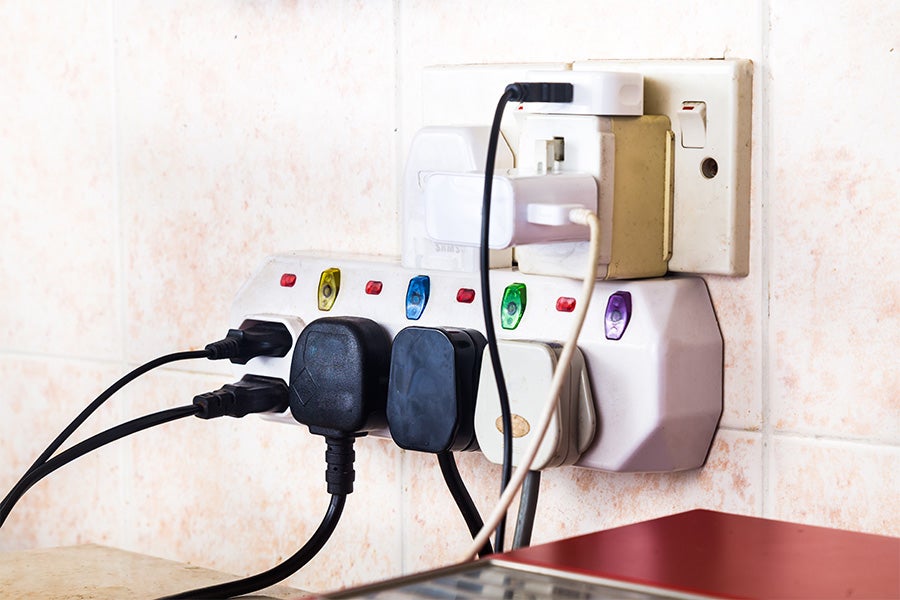
An overloaded circuit usually occurs because too many appliances are plugged into the same circuit. For example, if you’re making a brew, toasting some bread, charging your phone, washing a load of laundry, switching on the tumble dryer, and you’re playing on your Xbox at the same time, you might be overloading your electricity. This will particularly be the case if a lot of these appliances are plugged into the same sockets or the same circuit.
Overloading your sockets is extremely dangerous, as the circuit simply doesn’t have the extra amperage to support all these appliances. If you do find you need more plug sockets for a particular area of your home, a qualified electrician can help install them safely for you.
If a fault causes the live and neutral wires somewhere in the circuit to come into contact, a large amount of current will flow and overload the circuit. Short circuits are dangerous because high levels of electricity can heat up the wiring and cause a fire.
However, your circuit breaker will detect the surge and then trip (or a fuse will blow if it’s an older fuse box).
A short circuit can be caused by a faulty light switch, power socket, appliance, or cable. If the power cuts out again after you reset the breaker or fuse, you may be able to narrow it down to one of these. Or, to be safe, you can ask a qualified electrician to investigate for you.
A ground fault occurs when a live wire makes contact with something that’s earthed, such as the earth wire, an earthed part of a junction box, or a grounded area of an appliance. Live wires are usually brown, neutral wires are usually blue, and ground wires are typically striped green and yellow.
When a live wire makes contact with an earth wire or earthed area, a surge of electrical current flows to the circuit breaker, which trips. Ground faults usually happen when equipment is faulty.
Ground faults can cause a nasty electric shock that can be fatal, or cause injury. Kitchens and bathrooms are especially dangerous for this reason. So, if you suspect you may have a ground fault, get it fixed immediately to prevent any accidents.
A damaged appliance, a worn plug, or faulty internal wiring can repeatedly trip your consumer unit. If the power cuts out shortly after plugging something in, that appliance could be the cause.
If you notice any of the following, it could mean your fuse box isn’t working as it should and may need repairing or replacing.
If your fuse box trips regularly without an obvious cause, it may be struggling to cope with your home’s electrical demands or could be developing a fault.
A burning smell, warmth, or scorch marks around the fuse box are serious warning signs. These can indicate overheating components and should never be ignored.
Unusual buzzing sounds from the consumer unit, or lights flickering throughout your home, can point to loose connections or failing components.
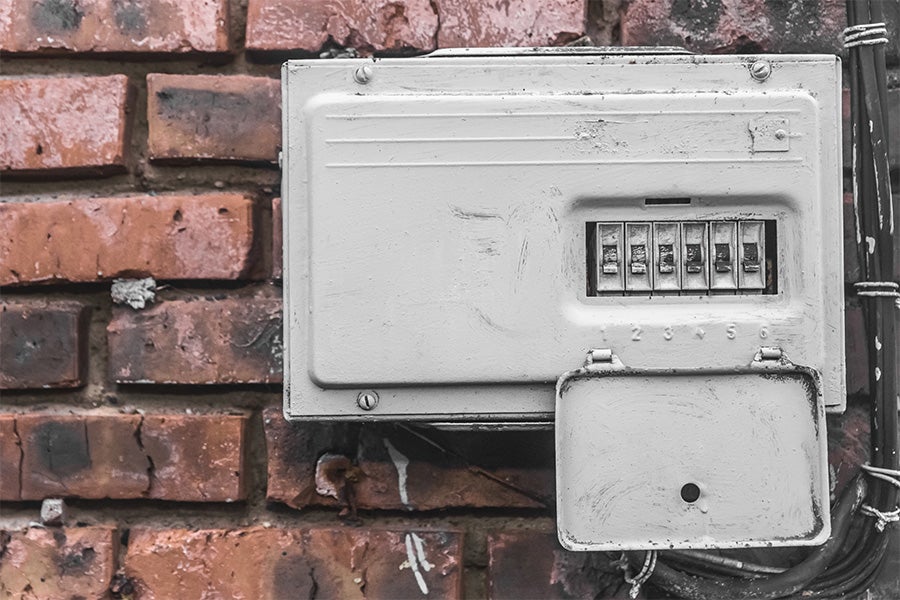
Cracks, corrosion, loose parts, or signs of moisture around the fuse box can all affect how safely it operates.
If electricity cuts in and out without clear reason, this may suggest an internal fault within the fuse box or wiring system.
If a circuit breaker won’t stay in the ‘on’ position after resetting, this usually means there’s an unresolved fault that needs professional investigation.
Circuit breakers rely on an internal spring mechanism to trip and reset properly. If this spring fails, the breaker may not function correctly, even if there’s no active fault.
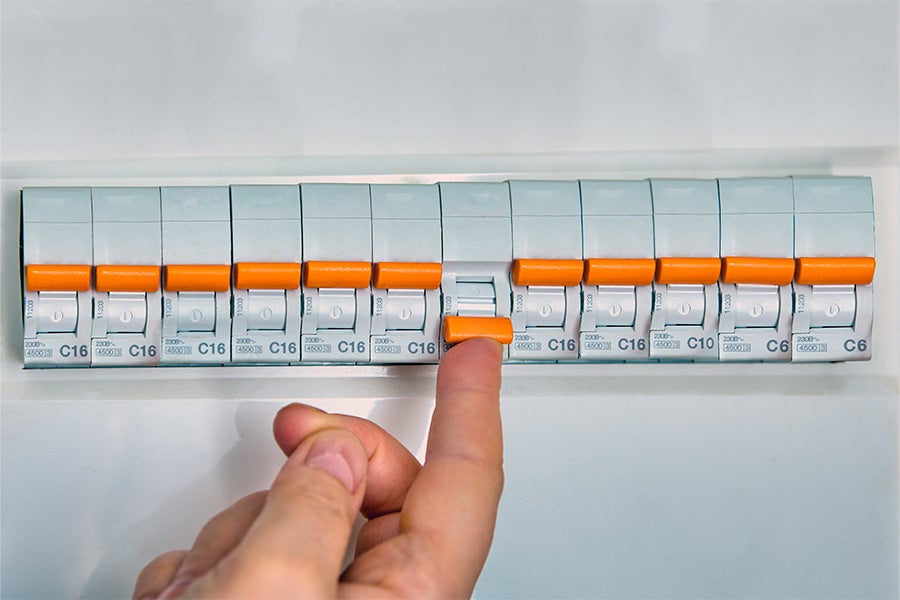
If your fuse box keeps tripping, it’s important to put safety first. While you can reset a breaker once to see if the issue was temporary, repeated tripping is a sign that something isn’t right.
Avoid repeatedly switching the power back on, and never attempt to repair or replace parts of the fuse box yourself. Diagnosing and fixing fuse box issues, or replacing a faulty consumer unit, is a job for a qualified electrician, who can safely identify the cause and carry out any necessary work.
Electrical problems can be stressful, especially when they happen unexpectedly. With our Electrical Cover, you’ll have access to professional electricians who can help diagnose and fix electrical faults safely and efficiently.
Whether it’s a fuse box issue, faulty wiring, or a sudden power problem, HomeServe is a friendly, reliable helping hand that’s just a call or click away.
Our help & advice articles cover Plumbing, Home heating, Electrical, Energy-saving and Home maintenance.